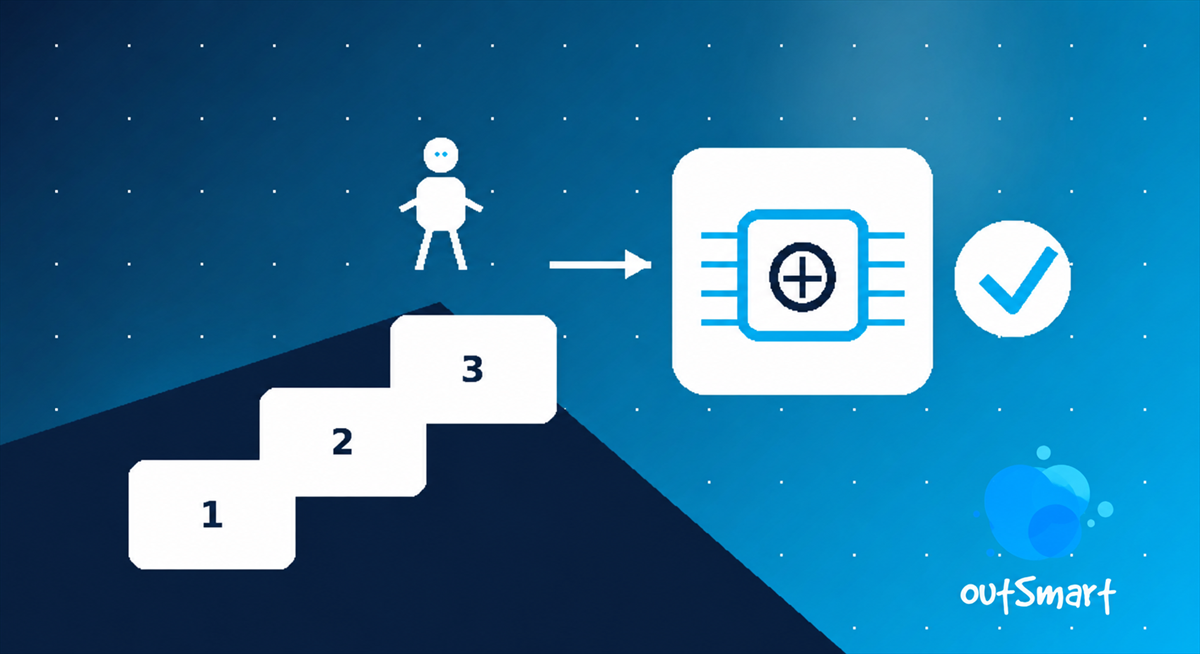
You've done everything you were told to do. Finished the degree. Kept the CGPA respectable. Added three certifications to your LinkedIn. Applied to 90 roles on four different portals. And what came back was silence. Or worse — an automated rejection at 2 a.m. that took eight seconds to generate and eight months of your effort to earn.
If you're sitting with that specific mix of confusion and quiet panic right now, this blog is for you. Because the problem isn't that you're not good enough. The problem is that the bottom rung of the career ladder has moved — and nobody sent you the update.
What actually changed at the entry level
A 2026 survey of 1,000 hiring managers found that 48% would rather invest in AI tools than hire and train a recent college graduate, 55% of companies have shifted at least part of their entry-level hiring budget to AI, and 45% have restructured so that one senior worker plus AI does the work that used to take multiple entry-level hires.
But here's the part the doom-scrolling headlines leave out. Hiring isn't collapsing. It's re-sorting. Among companies actively using AI, 46% reported an increase in entry-level hiring, versus 13% reporting a decrease — and companies with a clear company-wide AI plan are more likely to report hiring growth and higher satisfaction with entry-level hires.
In India, the picture is genuinely encouraging on paper. The India Skills Report 2026 puts national employability at 56.35%, up from 54.81%, with India holding 16% of the world's AI talent pool and the gig and freelance workforce projected to reach 23.5 million by 2030. So: more graduates are employable than ever. And roughly four in ten still aren't. The gap between those two groups is what this blog is about.
The new deal: you're not hired to do tasks, you're hired to own outcomes
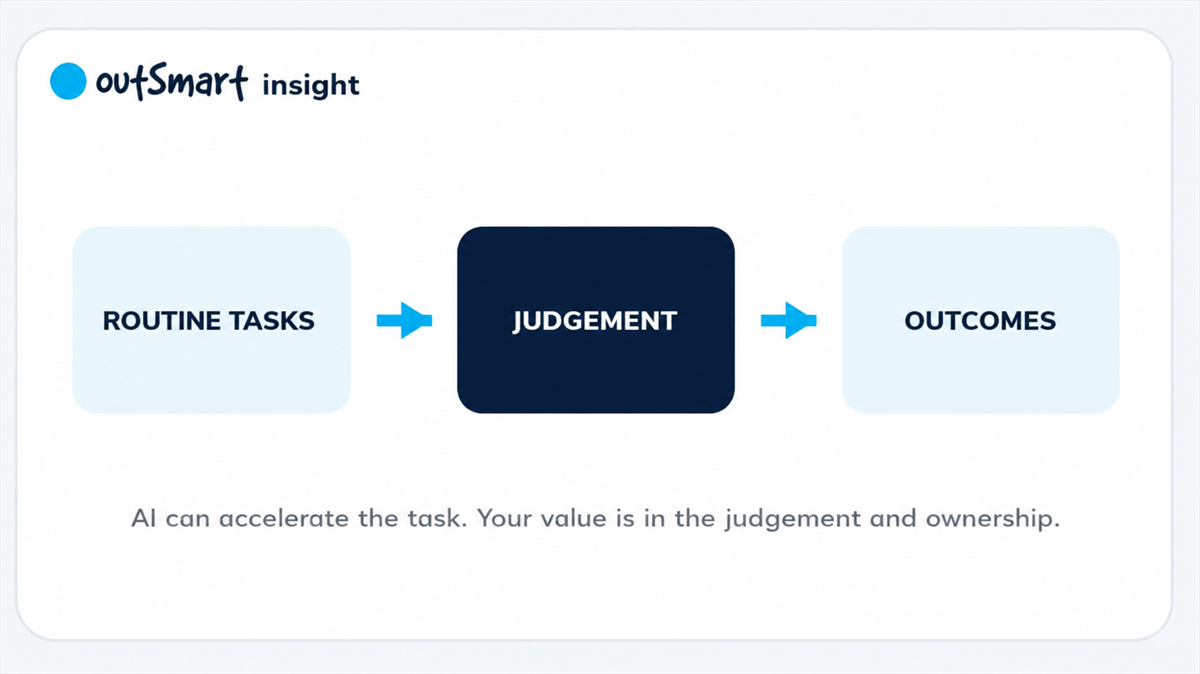
The old fresher contract was simple: do the small stuff reliably for two years, we teach you the real job. That contract is being quietly rewritten. When AI absorbs the small stuff, what's left for a junior is judgement — deciding what's worth doing, catching when the output is wrong, and carrying a piece of work to a finish line without being chased.
42% of employers said AI has increased the analytical and judgement-based responsibilities of junior workers. Three in four hiring managers say recent graduates need help reading routine work documents like memos, contracts or budgets, and only 17% fully trust recent grads to represent the company in front of customers. That last number is a map: employers aren't short of people who can use tools — they're short of people they can put in a room with a client.
Real-life translation: two freshers apply for a marketing associate role. One says "I use ChatGPT for content." The other says "I ran our college fest's Instagram for six months — 400 to 5,200 followers. I used AI to draft, but I rewrote every caption because the AI version sounded like a brochure and our audience is 19-year-olds." Same tools, completely different candidate. The second one showed judgement, ownership and an outcome. That's the hire.
Why "I'll figure it out on the job" no longer works
There used to be a runway — a grace period to be slow, ask basic questions, and learn the unwritten rules. That runway has shortened. Teams are leaner, managers are stretched thinner, and degree requirements are already loosening across sectors in favour of portfolios, projects and demonstrable impact. Good news if you're from a tier-2 college or a "non-technical" degree — the gate is no longer only your institution's name. But the proof burden has shifted onto you, and proof is built before the interview, not during it.
The three things that make a fresher hireable in 2026
- Evidence over vocabulary. One piece of visible work beats five certificates — a dashboard built for a real NGO, a spreadsheet that saved someone four hours a week, a 6-slide brand teardown.
- AI fluency, not AI dependence. 35% of entry-level jobs now require AI skills. Fluency means knowing what the tool is bad at — a fresher who submits raw AI output is a liability; one who catches its errors is an asset.
- Communication under mild pressure. Can you explain your work in 90 seconds? Take critical feedback without collapsing or arguing? This is the most underrated hiring filter.
Nearly 9 in 10 graduates now worry AI or automation could replace entry-level roles, up from 64% a year earlier, while only 36% say their college adequately prepared them to use AI at work. You're not imagining the pressure, and you're not uniquely behind — most people your age are responding by collecting more certificates instead of building more proof. That's your opening.
OutSmart Perspective
At OutSmart, we keep meeting the same person: bright, hardworking, degree in hand, absolutely stuck — not for lack of knowledge, but because nobody ever taught them the applied layer: how to turn what they know into work someone will pay for, how to talk about themselves without shrinking or exaggerating, how to hold their nerve in an interview. Academic learning gives you information; careers run on application, communication and self-awareness. We build around coaching and cohorts rather than lectures, because you learn judgement by doing real work, getting honest feedback, and repeating that loop until it becomes instinct. We won't promise you a job — nobody honest can. What we can do is make sure that when the opportunity shows up, you're not the person who could have been ready.
What You Can Start Doing Today
- Build one visible proof-of-work this month for a real business, NGO, or college club. Document what changed because of you, in numbers if possible.
- Rewrite your CV around outcomes — delete every "responsible for," replace with "did X, which led to Y."
- Audit your AI use for one week. Note every time it got something wrong and you caught it — those catches are your interview stories.
- Practise the 90-second explanation. Record yourself, watch it back, cut it down, repeat.
- Send five specific messages, not fifty generic applications. Specific beats mass every time.
- Learn to read a real business document — a budget, invoice or proposal — so you understand where the money comes from and goes.
- Ask one person this week: "What's the one thing that would make you hesitate to hire me?"